

The internet has a unique ability to turn the simplest things into global phenomena. A single word, image, sound, or even a number can suddenly take over social media, comment sections, and group chats. Among these curious digital trends, the 67 meme stands out as a perfect example of how internet humor thrives on mystery, repetition, and shared understanding.
At first glance, “67” looks like just another number. No obvious joke. No built-in punchline. Yet, over time, it has grown into a recognizable meme that sparks curiosity, laughter, and confusion in equal measure. People encounter it unexpectedly in comments, captions, reaction images, and short videos, often without explanation.
This article explores the full story of the 67 meme—where it came from, how it spread, why people find it funny, and what it reveals about modern meme culture. Whether you’ve seen it everywhere or are hearing about it for the first time, this deep dive will help you understand why such a simple number became a powerful internet symbol.
What Is the 67 Meme?
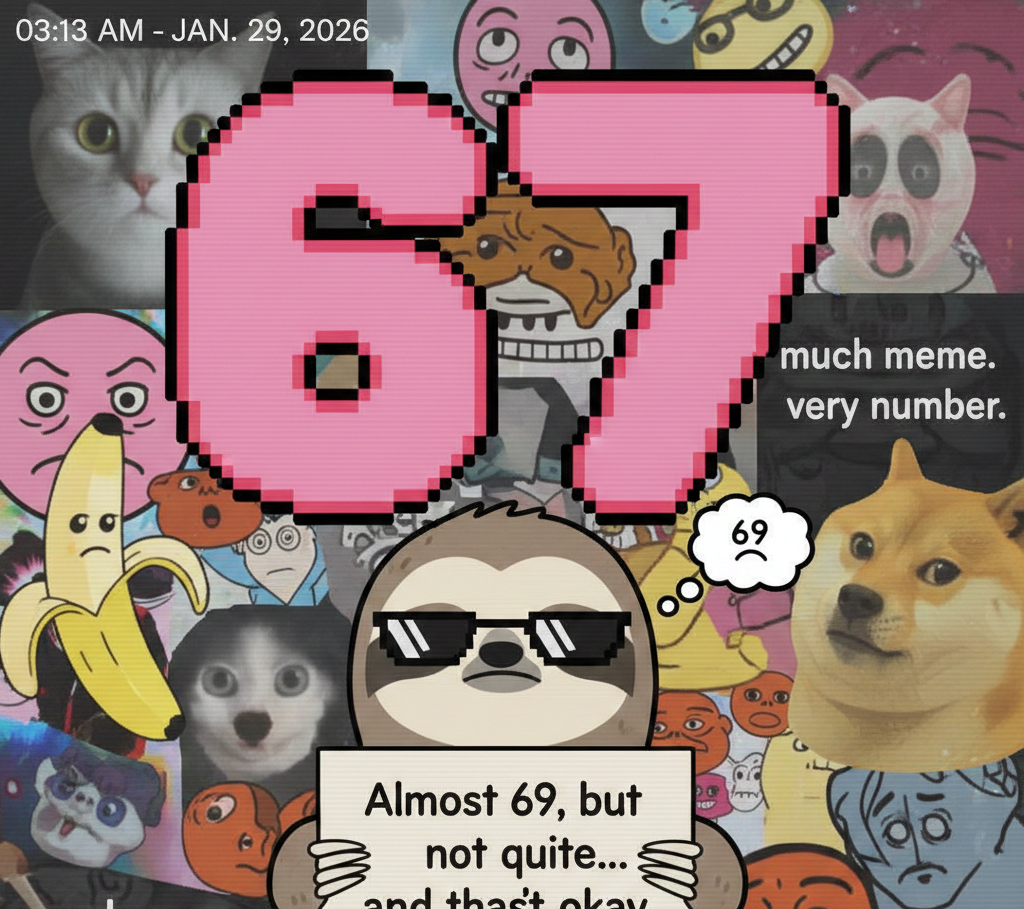
The 67 meme is a form of internet humor built around the number “67,” usually presented without context or with intentionally vague captions. Its humor doesn’t come from a traditional joke structure. Instead, it relies on absurdity, surprise, and shared confusion.
In many cases, the number appears:
-
As a standalone comment
-
Overlaid on random images
-
Used as a reaction to unrelated posts
-
Inserted into conversations without explanation
The lack of context is exactly what makes it funny. People who recognize the meme understand that it isn’t meant to “mean” something in a traditional sense. Its power lies in its randomness.
The Origins of the 67 Meme
Early Appearances Online
Like many internet memes, the exact origin of the 67 meme is difficult to pinpoint. It did not begin as a carefully planned joke or marketing campaign. Instead, it emerged organically from online communities that enjoy absurd humor.
Some of the earliest sightings were in comment sections on platforms like TikTok, Instagram, and YouTube. Users would reply to posts with nothing more than “67,” often receiving likes and confused replies.
This repetition sparked curiosity:
-
Why 67?
-
Is there a hidden meaning?
-
Am I missing a joke?
As more people started copying the behavior, the meme gained momentum.
The Role of Inside Jokes
Internet culture thrives on inside jokes—humor that only makes sense if you’ve seen it before. The 67 meme fits perfectly into this category.
At first, only a small group of users understood that the number itself was the joke. As it spread, more people joined in, even if they didn’t fully understand why. This cycle of confusion and imitation helped the meme grow rapidly.
Why the 67 Meme Is Funny
Absurdism and Randomness
Modern meme culture often leans heavily on absurdism. Unlike traditional jokes that have a clear setup and punchline, absurd memes are funny because they defy logic.
The 67 meme works because:
-
It has no obvious meaning
-
It appears in unexpected places
-
It disrupts normal conversation flow
This randomness creates a moment of surprise, which is a key ingredient in humor.
Shared Confusion as Comedy
Another reason the 67 meme resonates is the shared confusion it creates. When someone sees “67” in a comment section and doesn’t understand it, they often scroll through replies looking for answers.
That confusion becomes part of the joke. People who already know the meme enjoy watching others try to make sense of it.
Minimal Effort, Maximum Impact
One of the reasons memes spread so quickly is ease of participation. Typing “67” requires almost no effort, yet it allows users to feel part of a larger online trend.
This simplicity lowers the barrier to entry and encourages mass participation.
How the 67 Meme Spread Across Platforms
TikTok
TikTok played a major role in popularizing the 67 meme. Short-form video content thrives on fast, punchy humor, and a random number appearing in comments or captions fits perfectly into this environment.
Creators often noticed that comments saying “67” received:
-
High engagement
-
Replies asking for explanations
-
Likes from users who recognized the joke
This encouraged others to join in.
Instagram and Reels
On Instagram, the meme appeared in comment sections under viral posts and reels. Sometimes it was paired with unrelated images, making it even more confusing—and funnier.
Because Instagram users often scroll quickly, a random “67” stands out visually and mentally.
YouTube and Shorts
On YouTube, especially under Shorts and trending videos, the 67 meme became a recognizable pattern. Viewers would scroll through comments and suddenly see the number repeated by multiple users.
This repetition reinforced the meme’s presence and made it feel unavoidable.
Variations of the 67 Meme
As with any popular meme, variations quickly emerged. These adaptations helped keep the meme fresh while maintaining its core identity.
Image-Based Versions
Some users began placing “67” over random or exaggerated images. The contrast between the image and the meaningless number added another layer of humor.
Caption-Based Memes
Others used captions like:
-
“Bro really said 67”
-
“Only real ones understand 67”
-
“67 moment”
These captions playfully imply meaning without ever explaining it.
Video Edits
In short videos, creators sometimes pause dramatic moments and flash “67” on the screen. The sudden interruption creates a comedic effect by breaking expectations.
The Psychology Behind Number Memes
Why Numbers Work as Memes
Numbers are neutral by nature. They don’t carry emotional weight on their own, which makes them perfect for absurd humor.
When a number like 67 becomes a meme, it transforms from a neutral symbol into a shared cultural reference.
Pattern Recognition
Humans are wired to look for patterns and meaning. When people repeatedly see “67” without context, their brains automatically try to interpret it
The failure to find meaning becomes amusing, especially when others clearly seem to “get it.”
Comparison With Other Number Memes
The 67 meme is not the first number-based meme to gain popularity. Internet history includes many examples where numbers took on humorous significance.
What makes 67 different is its lack of obvious reference. Unlike numbers tied to dates, statistics, or pop culture events, 67 feels intentionally meaningless.
This makes it flexible and adaptable across different types of content.
Community and Identity Around the 67 Meme
Feeling “In on the Joke”
Memes often create a sense of belonging. Recognizing the 67 meme gives users a feeling of being part of an inside group.
When someone comments “67” and receives likes or knowing replies, it reinforces that sense of shared identity.
Gatekeeping Through Humor
Interestingly, memes like this also create light-hearted gatekeeping. People who don’t understand the joke may feel left out, which ironically increases their desire to understand it.
This dynamic fuels further spread.
Criticism and Confusion
Not everyone enjoys the 67 meme. Some users find it annoying, repetitive, or pointless. Others feel frustrated when they can’t find an explanation.
However, this reaction is part of what keeps the meme alive. The contrast between those who understand and those who don’t creates ongoing engagement.
The Lifespan of the 67 Meme
Will It Fade Away?
Most internet memes have a limited lifespan. Some burn out quickly, while others evolve and resurface over time.
The 67 meme’s simplicity gives it an advantage. Because it isn’t tied to a specific event or trend, it can reappear whenever users feel like reviving it.
Evolution Over Time
Even if the original usage declines, variations and references may continue. The meme might change form, combine with other trends, or inspire new number-based jokes.
What the 67 Meme Says About Internet Culture
The popularity of the 67 meme reveals several truths about modern online behavior:
-
Humor doesn’t need complexity
-
Shared confusion can be entertaining
-
Participation matters more than explanation
-
Meaning is often secondary to vibe
In a fast-paced digital world, memes like this offer quick moments of connection and laughter.
How Brands and Creators React to Such Memes
Some content creators and brands attempt to jump on viral trends like the 67 meme. While this can sometimes work, it often feels forced if not done carefully.
Memes rooted in absurdity are especially difficult to use authentically in promotional content.
Is There a “Right” Way to Use the 67 Meme?
There are no strict rules, but successful use often involves:
-
Keeping it unexpected
-
Avoiding over-explanation
-
Letting randomness do the work
Overusing it or trying too hard to explain it can kill the humor.
Final Thoughts: Why the 67 Meme Matters
At its core, the 67 meme is a reminder of how playful and unpredictable the internet can be. It shows that humor doesn’t always need logic, structure, or explanation
Read more…. infoorbit.co.uk
