

Have you ever wondered if the white rhino is extinct? It is a heartbreaking question. The simple answer is yes and no. It depends on which type of white rhino you mean. There are two main subspecies. The southern white rhino has a population in the thousands. But the northern white rhino is functionally extinct, with only two females left in the world. This situation makes the question “is the white rhino extinct” a very complicated one. The story of these animals is a tale of two very different fates. It’s a story of amazing recovery and a desperate race against time. Understanding the difference is key to understanding the threat of extinction they face.
Table of Contents
Understanding the White Rhino: A Tale of Two Subspecies
The white rhino, known scientifically as Ceratotherium simum, is not actually white. Its name likely came from the Afrikaans word “weit,” which means wide. This refers to their square, wide mouths, perfectly designed for grazing on grass. They are the second-largest land mammal, only smaller than the elephant. These gentle giants can weigh up to 2,400 kilograms and live for up to 50 years in the wild. However, the story of the white rhino is split into two very different parts: the northern and southern subspecies.
The northern white rhino, Ceratotherium simum cottoni, once roamed across central and East Africa. The southern white rhino, Ceratotherium simum simum, lives in the south. Both faced a high risk of extinction. But their recent paths have diverged drastically.
The southern white rhino was once thought to be extinct. At the end of the 19th century, fewer than 100 remained in South Africa. Through incredible conservation efforts, they were brought back from the brink. Now, there are over 15,000 of them. This is one of the greatest conservation success stories ever. It shows what we can achieve when we work together to save a species.
However, the question “is the white rhino extinct” is most relevant to its northern cousin, and the answer is a tragedy.
Is the White Rhino Extinct? The Northern White Rhino Crisis
The northern white rhino subspecies is teetering on the very edge of existence. Conservationists consider them “functionally extinct.” This means they can no longer breed naturally. Today, only two northern white rhinos are left in the entire world. They are both females, named Najin and Fatu. They live at the Ol Pejeta Conservancy in Kenya. They are under 24-hour armed guard to protect them from poachers. This situation is exactly why people ask, “is the white rhino extinct?” For this subspecies, extinction in the wild is a terrifying reality.
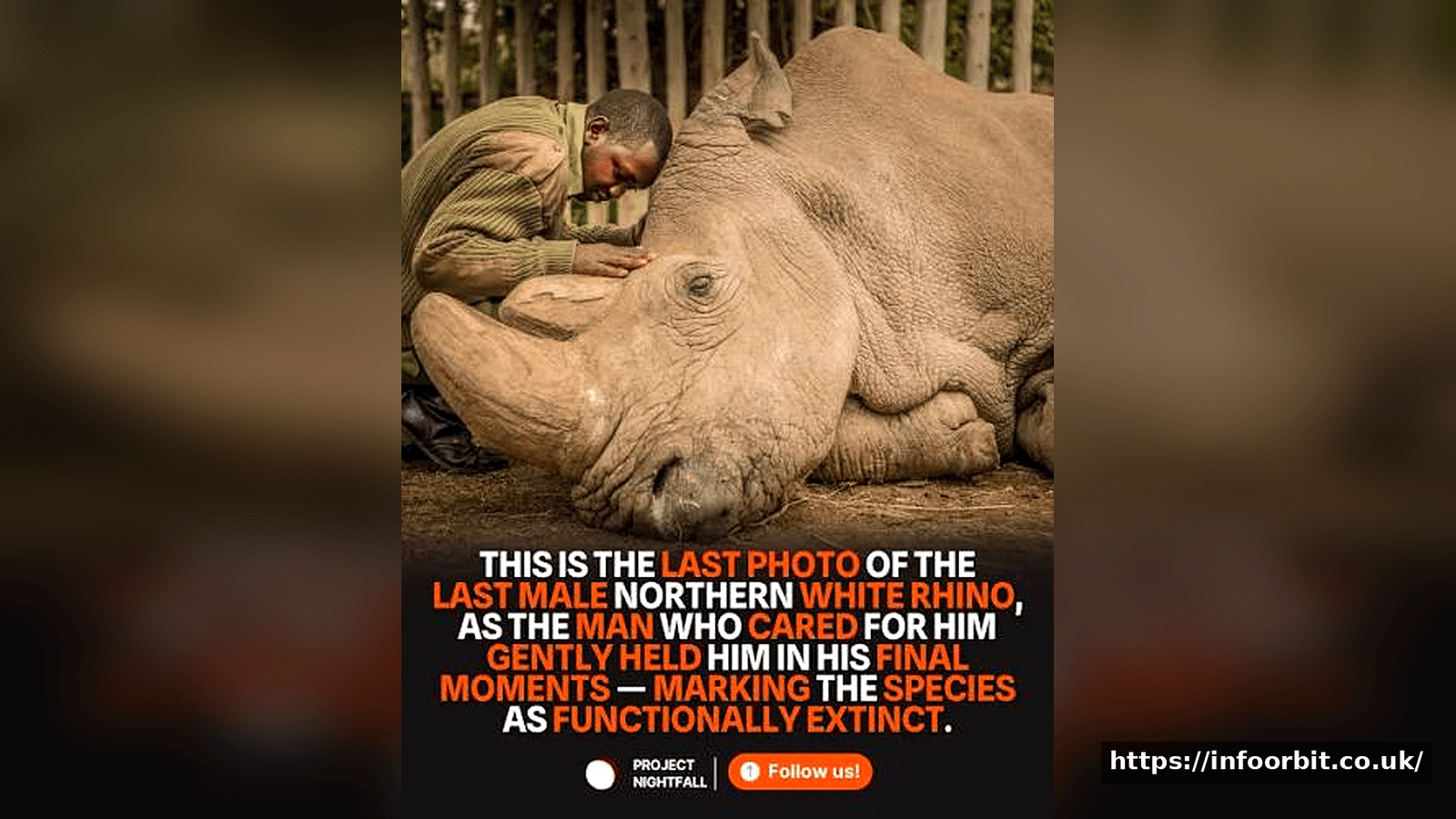
The last male, named Sudan, died in 2018. His loss marked a turning point. Sudan was 45 years old, and with his death, the hope for natural breeding ended. His passing was a stark reminder of how human activity, like poaching and habitat loss, can push animals to the edge. The northern white rhino’s tragic story highlights how extinction is not just a future threat. For some animals, it is already happening right before our eyes.
Where Did All the Northern White Rhinos Go?
The decline of the northern white rhino is a direct result of human actions. For decades, they were targeted for their horns. Poachers kill rhinos to supply the illegal international trade in rhino horn. This horn is falsely believed in some cultures to have medicinal powers. It is now worth more than gold on the black market. This enormous value has made the rhino a target for organized crime syndicates. The demand from Southeast Asia and China created a poaching crisis that these animals could not survive.
The situation was made worse by civil wars and political instability in their historic range. Countries like Chad, Sudan, Uganda, and the Democratic Republic of Congo saw their rhino populations vanish. The habitat destruction that came with conflict left them with nowhere to hide. Their numbers dropped from thousands to just a handful. This decline shows how deeply connected wildlife conservation is to human peace and stability.
Southern White Rhinos: A Conservation Success Story
While the northern subspecies is on the brink, the southern white rhino tells a different tale. It is a testament to what conservation can do. At the start of the 1900s, they were nearly extinct. There were only about 20 to 50 individuals left in South Africa’s Umfolozi Game Reserve. Dedicated conservationists and the South African government stepped in. They created protected areas, enacted anti-poaching laws, and carefully managed the population. This allowed the subspecies to bounce back in a spectacular way.
This massive recovery is one of the greatest conservation stories in history. By the end of 2024, there were an estimated 15,752 southern white rhinos living across Africa. They are now classified as “Near Threatened” by the IUCN Red List. Most of them live in South Africa, Namibia, Zimbabwe, and Kenya. While they are not out of danger, their comeback shows that extinction is not inevitable. It proves that with strong political will and action, even animals on the very brink can recover.
Why Are White Rhinos Poached?
The primary reason poaching persists is the high value of rhino horn. It is composed of keratin, the same protein that makes up our hair and fingernails. Despite this, many people in Asia believe it can cure diseases like cancer. Others seek it as a status symbol to display wealth. These misconceptions drive a huge black market demand. The price per pound is often higher than the price of gold. This makes poaching an attractive, albeit illegal, activity for criminal networks.
The trade is not a simple act. It is a sophisticated crime. Transnational syndicates organize large-scale operations to kill rhinos and smuggle the horns. They use advanced technology, sometimes even helicopters, to track their targets. This industrial-scale poaching is the single biggest threat to rhinos. It is the primary reason the question “is the white rhino extinct?” is still a very real concern for conservationists.
The Ecological Role of White Rhinos
White rhinos are a keystone species. This means they play a critical role in their ecosystem. Their grazing habits help shape the African savannah. By eating large amounts of grass, they create a “mosaic” environment. This short grass helps other species. It encourages the growth of plants that smaller herbivores need. Their grazing also helps reduce the risk of wildfires. When rhinos live in a healthy ecosystem, the whole habitat benefits.
They are also vital to the ecosystem through their behavior. They create wallows in muddy waterholes. These mud baths are used by other animals too. Their dung is used by insects for food and breeding. Losing the white rhino, especially the northern subspecies, wouldn’t just be a loss of a species. It would fundamentally change the African landscape. That is why the question “is the white rhino extinct?” carries so much weight for the environment.
Threats Facing White Rhinos
Poaching is the most immediate and well-known threat. But it is not the only one. Habitat loss, as human populations grow, is a major problem. As we clear land for agriculture and settlements, rhinos lose their homes. This pushes them into smaller, more crowded areas. Climate change, leading to severe droughts, also puts them at risk. During recent droughts, conservationists even had to provide hay and water to prevent them from dying of thirst.
Another hidden threat is corruption. In some regions, poor governance allows poaching to flourish. When park rangers are not paid, or when officials look the other way, it makes the job of poachers much easier. The decline of the northern white rhino is closely linked to periods of human conflict and corruption. For rhinos to survive, anti-poaching efforts must be combined with strong laws, community support, and good leadership.
Innovative Conservation: Hope for the Future
The future is not entirely bleak. Scientists are working on cutting-edge technology to save the northern white rhino. The BioRescue Project is leading this work. They are developing advanced reproductive techniques. Scientists have already successfully created over 30 northern white rhino embryos in a lab. They use eggs from the two remaining females and frozen sperm from deceased males. The next step is to implant these embryos into southern white rhino surrogate mothers. If successful, this would be the first time a subspecies has been brought back from the brink using IVF.
This high-tech rescue mission is a global effort. It gives us a glimmer of hope. While this technology is expensive and difficult, it proves that we are not giving up. It shows that humans are willing to invest massive resources to reverse the damage we have caused. The effort to save the northern white rhino is a powerful symbol of our commitment to conservation.
Protecting Rhinos: What Is Being Done Today
The fight to save the rhino happens on many fronts. On the ground, rangers and anti-poaching units are the first line of defense. They risk their lives daily to protect these animals. They do this with the help of technology, like drones and GPS trackers. They also use highly trained dogs to track poachers. In places like Mankwe Wildlife Reserve in South Africa, where Dr. Lynne Mactavish works, teams work around the clock to secure the perimeter.
Another key strategy is dehorning. This is a painless procedure where vets trim a rhino’s horn. This makes the animal less of a target for poachers. In South Africa, 52% of the white rhino population is on private reserves. Many of these reserves struggle to afford the costs of protection and dehorning, which can be up to £25,000 per rhino per year. This is why partnerships and funding are so critical to the conservation effort.
Is the White Rhino Extinct? The Answer Depends
So, “is the white rhino extinct?” The honest answer is: not yet. If you are asking about the species as a whole, the answer is no. There are still over 15,000 white rhinos in the world. They are surviving, but they are in trouble. However, if you are asking about the northern white rhino subspecies, the answer is very close to yes. They are functionally extinct. Without the help of IVF and surrogacy, this magnificent subspecies would be gone forever.
It is a stark contrast that reminds us of our impact on the planet. The story of the southern white rhino is a reason to celebrate and keep fighting. The story of the northern white rhino is a warning. It tells us that extinction is a real and present danger. The fight is not over, but it is a race against time.
Looking Ahead: The Future of the White Rhino
The next ten years will be crucial. The success of the BioRescue Project could change everything. If the first northern white rhino calf is born via IVF, it would be a historic moment. It would prove that science can undo some of the worst effects of human greed. But this is a long shot. It requires huge financial and political support. That is why public awareness and donations are so important. They fuel the research and keep the rangers on the ground.
The future also depends on demand reduction. We must continue to educate people about the ineffectiveness of rhino horn as a medicine. Reducing the demand is the only long-term solution to end poaching. We all have a role to play. By supporting conservation groups and spreading awareness, we can help ensure that the question “is the white rhino extinct?” will be a historical one, and not a modern reality.
Frequently Asked Questions (FAQs)
Q: Is the white rhino extinct right now?
A: The species is not extinct, but one of its two subspecies is. The southern white rhino has a population of over 15,000. However, the northern white rhino is functionally extinct, with only two females remaining in the world.
Q: Why is the white rhino going extinct?
A: They are primarily threatened by poaching. Their horns are highly valued on the black market, leading to illegal hunting. Habitat loss, climate change, and political conflict are also contributing factors.
Q: How many white rhinos are left in the world?
A: As of August 2025, there are an estimated 15,752 white rhinos left. The vast majority of these are the southern subspecies. Only two northern white rhinos remain.
Q: Are black rhinos and white rhinos the same color?
A: No, they are both grey. The name “white rhino” is a misunderstanding. It likely comes from the Afrikaans word “weit,” meaning “wide,” describing their square mouths. They are not white in color.
Q: What is being done to save the northern white rhino?
A: Scientists are using in vitro fertilization (IVF). They have created embryos from the eggs of the two remaining females and frozen sperm. They plan to implant these into southern white rhino surrogate mothers. This is part of the BioRescue Project.
Q: Do rhino horns grow back?
A: Yes, they do. Rhino horns are made of keratin, like human hair and nails. If a horn is safely trimmed by a veterinarian, it will regrow. This is often done to make the animal less attractive to poachers.
Conclusion
The question “is the white rhino extinct?” does not have a simple answer. It is a story of two paths. The southern white rhino represents a massive conservation victory, a testament to what we can achieve. The northern white rhino, however, represents a looming tragedy. With only two females left, they are a heartbreaking symbol of the cost of inaction.
But there is still hope. Science is offering a second chance through IVF. The dedication of rangers and communities continues to protect the animals we have. The future of the white rhino rests in our hands. We must support conservation efforts, fight against poaching, and raise awareness.
