

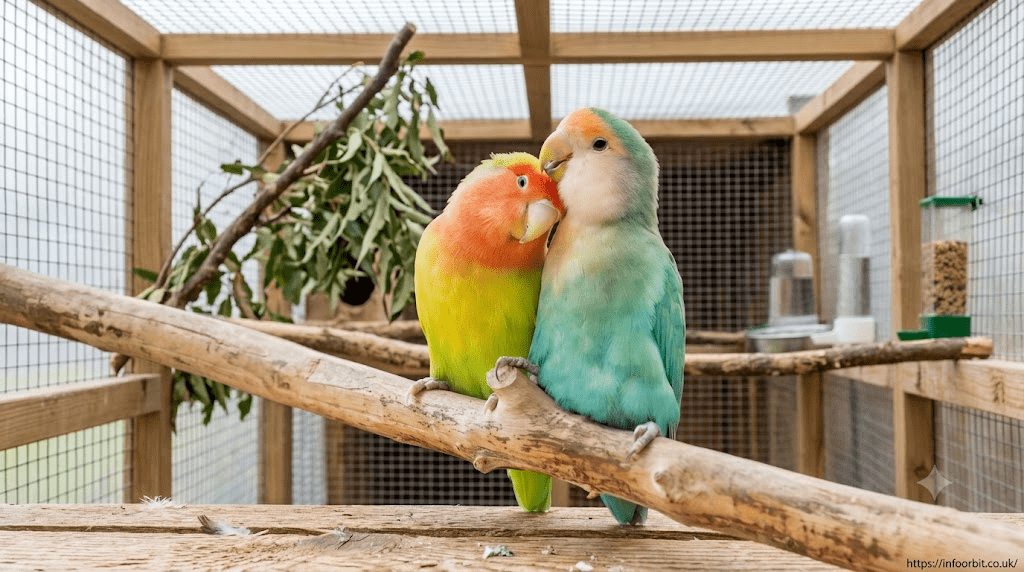
Imagine a tiny parrot with a bright pink face and a personality as big as the sky. That is the rosy-faced lovebird for you! These little birds are also called the peach-faced lovebird. They are one of the most popular pet birds in the world . They are known for being cuddly and full of energy.
These birds come from the dry lands of Africa . But they have won the hearts of people everywhere. If you want a smart and playful companion, this might be your bird. They are not just pretty to look at. They have big feelings and love to be around their people. In this guide, you will learn everything about how to care for them. We will talk about their personality, what they eat, and how to keep them happy. This guide will help you decide if a rosy-faced lovebird is the right pet for you.
Table of Contents
What is a Rosy-Faced Lovebird?
The rosy-faced lovebird is a small species of parrot. Its scientific name is Agapornis roseicollis . The name “lovebird” comes from how they bond with their mates. They like to sit close together and show affection . This species is also commonly called the peach-faced lovebird. These are the same bird . They are part of the parrot family and are known for their charming ways. They are smart and can learn tricks. In the wild, they live in small groups. They are very social animals. This social nature makes them great pets for people who have time for them.
Natural Habitat and Origin
The rosy-faced lovebird is native to southwestern Africa. You can find them in countries like Namibia and Angola . They love dry, open areas. They are often seen in the Namib Desert . They live in places with trees and mountains. They always stay close to water. They need to drink and bathe every day. In the wild, they are tough birds. They can handle very hot weather. It is interesting to note that feral populations now live in parts of the USA. For example, you can see them in Phoenix, Arizona . They have adapted well to the city life there. This shows how strong and flexible these small parrots are .
Physical Description: The Peach-Faced Beauty
The rosy-faced lovebird is a small bird. They are about 6 inches (15 cm) long . They weigh less than 2 ounces. The most famous feature is their face. It is a bright peachy-pink color. This is why some call them the peach-faced lovebird . The rest of their body is a beautiful bright green. They also have a bright blue rump. This splash of blue is very pretty. Their beak is a horn color. Their eyes are dark brown. Baby birds have a duller face. Their pink is not as bright. They also have a dark mark on their beak. This fades as they grow up . Both male and female birds look the same. This makes it hard to tell them apart just by looking.
Personality and Temperament
These birds are full of personality. They are bold and have a “big parrot” attitude . They are very friendly and love to interact. A rosy-faced lovebird can be very cuddly. They like to snuggle with their favorite person. They form strong bonds. They can see their owner as their mate . This bond is very deep. They can also get jealous. They may not like it if you pay attention to other people or pets. They are active and playful. They love to explore and chew on things. But they can be feisty. They are known for their shrill calls. They can be noisy. They can also be nippy if they are not socialized well .
How to Care for Your Rosy-Faced Lovebird
Caring for this parrot is a big responsibility. They can live for 15 to 20 years . This is a long commitment. They need a lot of attention. Here is a breakdown of what they need:
- Housing: They need a large cage. The bigger, the better. They love to climb and fly short distances. The cage bars should be strong.
- Diet: They need a varied diet. A seed mix is a good base. But they also need fresh fruits and vegetables. You can give them apples, carrots, and leafy greens .
- Grooming: These birds love to bathe. You should give them a shallow water bowl. You can also mist them with a spray bottle. This keeps their feathers clean .
- Social Needs: They need daily interaction. If you are gone a lot, think about getting two birds. This way, they keep each other company.
Health and Lifespan
With good care, these lovebirds live a long life. The average rosy-faced lovebird lifespan is between 15 and 20 years . Some can live even longer. To keep them healthy, you must keep their cage clean. Watch for signs of sickness. A sick bird often puffs up its feathers. They might also sit at the bottom of the cage. It is good to find an avian vet. Take your bird for regular check-ups. A healthy lovebird is an active lovebird. They love to play and eat well. Weight management is also important. Do not let them eat too many fatty seeds. A good diet helps them live a long, happy life.
Diet and Nutrition
A proper diet is key for your rosy-faced lovebird. In the wild, they eat seeds, berries, and leaves . As pets, we need to give them a balanced plate. A high-quality seed mix for small parrots is a good start. But you should add fresh food every day. Good choices are:
- Fruits: Apples, pears, bananas, and melon.
- Vegetables: Carrots, sweet potatoes, and dark leafy greens.
- Protein: Hard-boiled eggs are great for them.
- Pellets: Some owners use pelleted diets. This can be a good way to give them balanced vitamins.
Always provide fresh, clean water. Change the water bowl daily. Never give them avocado or chocolate. These are poisonous to birds. A good diet keeps their feathers bright and their energy high.
Training and Enrichment
Lovebirds are very intelligent. You can teach them tricks. Start with simple things like “step up.” Use positive reinforcement. This means rewarding them with a treat. They love millet spray as a special treat. Training is a great way to bond. It also gives them mental stimulation.
Enrichment is also very important. They need toys to play with. Without toys, they can get bored. Bored lovebirds might pluck their feathers. This is a health problem. Give them toys they can chew and shred. They love to tear paper into strips . Provide swings, bells, and ladders. Rotate the toys often. This keeps things new and exciting for them.
Breeding Information
Breeding rosy-faced lovebirds can be rewarding. But it is a big job. The female lays 4 to 6 eggs. She incubates them for about 23 days . The babies fledge (leave the nest) after about 43 days. In the wild, they nest in rock crevices . In captivity, you must provide a nest box. The female is the one who builds the nest. She will chew strips of paper. Then she tucks them into her feathers. She flies back to the nest with the materials . It is a fascinating behavior to watch. If you plan to breed, make sure you have homes for the babies. Do not breed them just for fun. It takes a lot of time and effort.
Common Color Mutations
The wild rosy-faced lovebird is green. But breeders have created many color variations. These are called mutations. Some of the most popular include:
- Blue: These birds have a blue body instead of green.
- Lutino: These are yellow and white. They have red eyes.
- Pied: These have patches of different colors.
These mutations are very popular in the pet trade. They are still the same species. They have the same personality and care needs. The only difference is the color of their feathers.
Pros and Cons of Owning This Bird
Before you get a rosy-faced lovebird, think about the pros and cons.
Pros:
- Very affectionate and loving.
- Smart and can learn tricks.
- Small size makes them easier to house.
- Beautiful and fun to watch.
Cons:
- Can be very loud with shrill calls.
- They can be nippy or aggressive.
- Need lots of daily attention.
- They can be jealous of others.
They are not good for people who want a quiet bird . They are also not the best for families with very small children. They might bite if they feel scared or threatened.
FAQs About Rosy-Faced Lovebirds
Q: Are rosy-faced lovebirds good pets?
A: Yes, they can be great pets. They are very loving and playful. But they need a lot of attention and can be noisy.
Q: How much does a rosy-faced lovebird cost?
A: The price varies. It depends on the color mutation. Common green birds are cheaper. Rare mutations cost more.
Q: Do rosy-faced lovebirds talk?
A: Most lovebirds do not talk. They are not known for mimicking speech. They are more likely to whistle and chirp .
Q: What is the difference between a rosy-faced and peach-faced lovebird?
A: There is no difference! They are the exact same species. The names are used interchangeably .
Q: Can rosy-faced lovebirds live alone?
A: Yes, they can live alone. But they need lots of interaction with you. If you are gone often, it is better to get a pair.
Q: How to tell male from female?
A: They look exactly the same. You need a DNA test to know the sex for sure.
Conclusion
The rosy-faced lovebird is a wonderful pet for the right person. They bring color and energy into your home. They are playful and loving. They will form a deep bond with you. But they are a big responsibility. They need your time and attention every day. They can live for many years. Make sure you are ready for a long-term friend. If you are, you will have a loyal and loving companion.
